
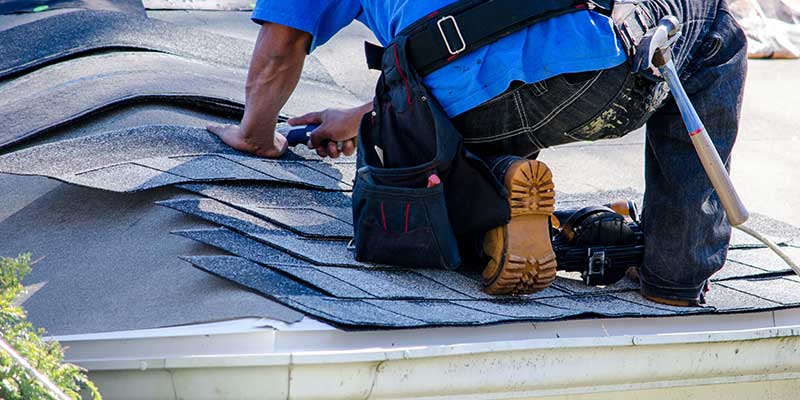
As for your house, the roof is one of the most significant elements since it protects you and your belongings from weather vagaries. Should you have engaged in planning for new roofing or just desiring an upgrade, you might have encountered Class 3 and Class 4 shingles. But what does it entail, and how does one select the right term for the house?
If you live where hail or storms can occur, you must understand the difference between Class 3 and Class 4 shingles. This blog will describe each option to help you select the best option that meets your needs and budget.
Understanding Shingle Ratings – What Do Classes Mean?
Shingles are categorized according to their hail impact resistance; the higher the resistance, the better the rating. The roofing industry created the Underwriters Laboratory 2218 (UL 2218) test in the middle of the 1990s to evaluate this capability.
This test is known as the steel ball test and measures the ability of a shingle to resist impact by dropping steel balls of varying weight on the shingles from different heights.
The outcome derived from the process is then given a Class rating, with the highest class severity being Class 4. Therefore, getting a higher rating will guarantee better protection, especially for places with unfriendly weather conditions.
What Are Class 3 Shingles?
Class 3 shingles are crafted using materials that provide flexibility and toughness, allowing them to absorb impacts without cracking. They are a type of roofing shingle with an impact resistance classification. Underwriters Laboratories (UL) has categorized the system from Class 1 to Class 4, where Class 3 reflects moderate impact resistance.
These shingles are tested by throwing a 75-inch steel ball from a height of 17 feet to emulate the effect of hail. If they are resistant to cracking, tearing, or breaking after two blows, they are classified as Class 3.
The durability of the Class 3 Shingles
Class 3 shingles offer a solid level of impact resistance. They’re built to withstand moderate hailstorms and are a reliable choice for many homeowners.
Application of the Class 3 Shingles
GAF’s shingles are tough, high-quality, and extremely attractive. They offer adequate protection while being relatively light and not causing too much financial burden.
Longevity of the Class 3 Shingles
Compared to Class 4 shingles, Class 3 shingles may be less durable in harsh climates but can also last for several years of usage for any home built in moderate climates.
Are Class 3 Shingles Worth It?
Class 3 shingles are recommended for those who live in areas that experience very limited severe weather occurrences and, therefore, can be considered relatively cheap while offering appropriate protection. Class 3 shingles are usually cheaper than Class 4, so if the budget is a constraint, it is good for it.
What Are Class 4 Shingles?
Class 4 shingles are a more high-end product, and they may use rubberized asphalt as one of their components so it can flex to absorb the impact without going brittle. The Class 4 shingles are the best when it comes to impact protection. This is the layer of protection against hail, winds, and anything else considered violent in the heavens. It falls into the UL 2218 standard, with Class 4 as the highest degree of impact protection.
These shingles also receive voluntary evaluations: compression and penetration by a 2-inch steel ball dropped from 20 feet to mimic hail. Assuming that the shingle is categorized as Class 4 if it can survive two strikes without chalking, cracking, splitting or damaging.
The durability of the Class 4 Shingles
Impact resistance is another important criterion, and in this respect, the Class 4 shingles emerge as the market leaders. They are designed to withstand powerful hail storms and offer the kind of shelter your roof needs.
Functionality of the Class 4 Shingles
Offering superior durability and flexibility, Class 4 shingles are designed for homes in areas with frequent extreme weather conditions.
Longevity of the Class 4 Shingles
These shingles typically last longer, even under harsh conditions, making them a worthwhile investment for homeowners in storm-prone areas.
Are Class 4 Shingles Worth It?
Class 4 shingles are ideal for houses in high-risk areas, and although they are costlier, they are always the best choice. Although Class 4 shingles are costlier than Class 3 shingles, the additional level of protection and the possibility of getting a discount on the insurance premium make them worthwhile.
Comparison of Class 3 and Class 4 Shingles
Feature | Class 3 Shingles | Class 4 Shingles |
Impact Resistance | Moderate impact resistance | Highest impact resistance |
Durability | Suitable for mild to moderate weather | Ideal for severe weather |
Longevity | Good, but shorter in severe climates | Excellent, lasts longer in any climate |
Cost | More budget-friendly | Costly upfront saves money long-term |
Ideal For | Regions with milder weather | Areas prone to hail and extreme weather |
What are the Pros and Cons of Class 3 Shingles?
Class 3 Shingles Pros
- Class 3 shingles are relatively cheap, which will help homeowners embrace this type of shingles since they can save money.
- In moderate climates, they offer adequate protection and are inexpensive and hard-wearing.
- Due to the flexibility, these shingles take less time to install, saving time and money.
Class 3 Shingles Cons
- Class 3 shingles are less resistant to extreme weather conditions and may need repair or replacement more often.
- Hail increases the rate of their depreciations due to shortened lifespans; thus, these cars are ill-suited for areas with hail storms.
What are the Pros and Cons of Class 4 Shingles?
Class 4 Shingles Pros
- Class 4 shingles protect the roof from hail and other natural disasters, so your roof will stand the test of the storm.
- They have longer life expectations; thus, replacements will not be required as often, cutting costs.
- This will give you a class 4 shingle and the potential to regain your insurance points and improve your home value when it is time to sell.
Class 4 Shingles Cons
- Class 4 shingles cost more initially than the other types of shingles, and this is one aspect that might worry homeowners with tight financial capabilities.
- They may seem excessive where the climate is less severe, where the degree of protection they afford would not be required.
Considerations for Homeowners
When choosing between class 3 and class 4 shingles, you should be prepared to research your local climate. If you reside in areas where storms are often experienced, this is where you will appreciate the need to go the extra mile and acquire Class 4 shingles.
However, in your region, where the temperatures might not be as extreme, Class 3 shingles may give you adequate protection while being relatively cheaper. Although impact-resistant shingles may cost more than regular ones, an insurance rebate and a higher property appraisal may help you reclaim the cost of the enhanced roofing system in storm-prone regions.
Summary of the Guide
Therefore, choosing Class 3 or Class 4 shingles will depend on cost and climate. Class 3 shingles provide maximum value for residents of moderate climates, while Class 4 shingles give exceptional protection to residents of storm-prone regions.
Understanding this knowledge can help you decide which will best suit your home for years.