
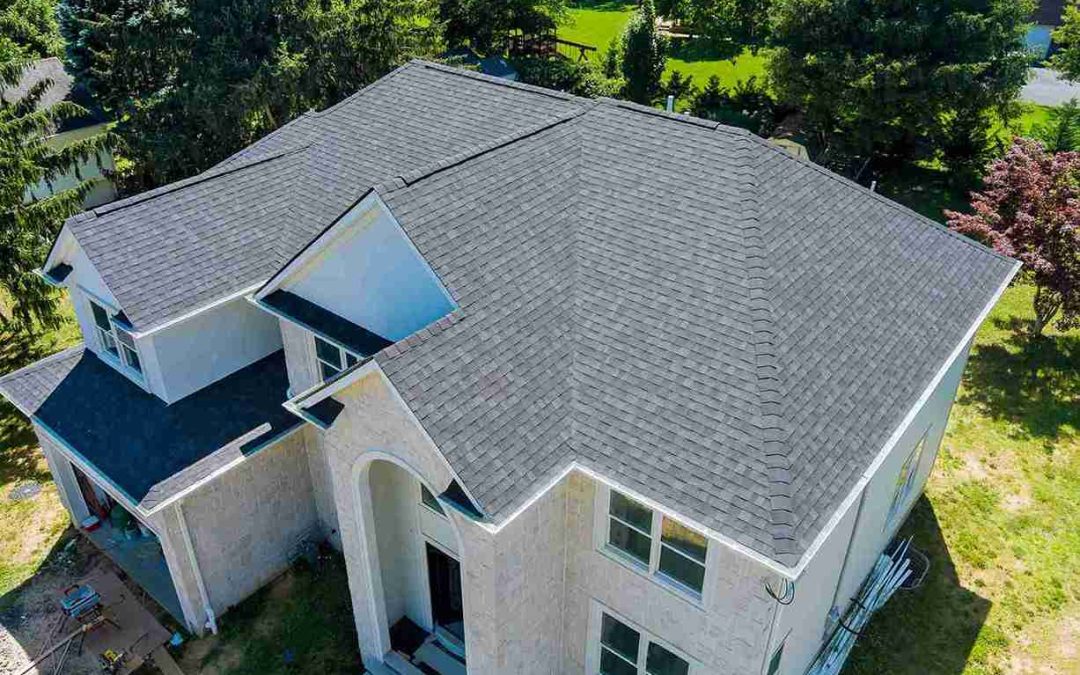
The roof is the ever-exposed component of any building that has to bear and withstand all weather and environmental elements constantly. That is why roofing materials have evolved a great deal to enhance their efficiency, durability and reliability. H Class asphalt shingles are an example of innovation in the field with extended strength and wind resistance.
Let’s understand H-Class shingles in detail here!
What are H Class Shingles?
According to ASTM D7158, the H Class asphalt shingles can withstand uplift forces at wind speeds of 150 mph. These shingles offer higher durability, weather resistance and longevity than traditional asphalt shingles.
In this blog, we have discussed H Class shingles in detail, including their composition, manufacturing process and benefits. Let’s dive into it!
What is the Composition of H Class Shingles?
H-Class Singles are made of the following ingredients:
Fiberglass Mat
It is a reinforcing material that provides durability to the shingles. It is a high-strength material, serving as the shingle’s backbone.
Asphalt
It is the main ingredient of the shingles that works as a water-shedding agent. It also serves as the binding agent to keep the granules in place.
Mineral Stabilizers
Also known as fillers, these fine materials are added to provide fire resistance to the shingles. They also help improve the flexibility, durability and weather resistance of the shingles.
Granules
These are crushed rocks with ceramic coating that make the face of the shingle. This is the material that provides color to shingles and keeps them from degrading due to constant UV exposure.
Back Surfacing
This fine material is applied to the shingle’s back, which prevents shingles from sticking to each other during the manufacturing process and storage.
How are H Class Shingles Manufactured?
Below is the general manufacturing process of H Class Shingles.
The Shingle Membrane
Step 1 of the shingle manufacturing process generally consists of a fiberglass membrane. This provides a flexible yet strong base to the asphalt shingles and adds to the fire and weather resistance of the shingle.
Asphalt Layering
The next step involves covering the large membrane sheets with hot asphalt. The addition of asphalt provides enhanced durability and resistance to the product. It also provides waterproofing and acts as a binding agent for other materials.
Shingle Granules
Granules are pressed onto the shingles while asphalt is still hot. These granules are crushed stones with a variety of colors. These granules are designed to resist algae and UV rays and reflect the heat from the sun.
Packaging
Once shingles are prepared, they are cut into 12” x 36”, packed into the bundles and rolled out of the manufacturing unit.
What are the Benefits of H Class Shingles?
H Class Shingles offer several benefits, some of them are as follows:
Wind Resistance
Although all asphalt shingles can resist wind, the H Class shingles have the highest wind resistance rating and can withstand uplift force from a 150-mph wind. They are classified as per ASTM D7158, which is a standard method of testing asphalt shingles’ wind resistance through the Uplift Resistance/ Uplift Force Method.
Impact Resistance
H-Class asphalt shingles are manufactured with premium materials and can withstand a substantial amount of impact. Their impact resistance is derived using Underwriter Laboratory Standard UL 2218. This standard classifies the shingles into 4 classes, from 1 to 4, where class 4 shingles are with the highest impact resistance.
Fire Resistance
Standard ingredients and manufacturing of asphalt shingles incorporate some highly fire-resistant materials, such as asphalt itself. That is why Class H asphalt shingles fall under the Class A fire resistance rating. This rating system is based on ASTM E 108 and UL 790. They are classified into three classes, i.e. Class A, Class B and Class C, with Cass A having the highest fire resistance rating.
Algae Resistance
Although algae do not pose any damage threat to asphalt shingles, they can hamper the aesthetic appearance of the shingles badly. H Class shingles are manufactured using algae-resistant materials and are also treated to prevent algae growth. This makes them substantially resistant to algae growth.
Solar Reflectance
H Class shingles are coated with materials that can reflect solar heat and rays back into the atmosphere, keeping the overall indoor temperature regularized. This feature helps reduce energy costs, saving you money in the long run.
What are Other Classes of Shingles?
Asphalt shingles are classified based on wind resistance under two ASTM standards, i.e.:
- ASTM D7158
- ASTM D3161
Classification Under ASTM D7158
This standard classifies the shingles based on their design capacity to resist uplift wind forces. They are classified as:
- Class D: These shingles can resist the uplift forces from wind at up to 90mph speed.
- Class G: These asphalt shingles can effectively withstand an uplift force generated from a 120mph wind.
- Class H: These asphalt shingles are designed to withstand uplift forces from a wind blowing at 150mph.
Classification Under ASTM D3161
D3161 standard classifies the asphalt shingles into three classes, i.e.:
- Class A: Class A asphalt shingles can tolerate a wind speed of 60mph.
- Class D: These shingles are designed to resist wind at up to 90mph speed.
- Class F: This class of asphalt shingles is able to withstand wind at up to 110mph speed.
What are the signs of Roof Damage from Wind?
Wind damage to the roof can be highly visible, especially after a severe event, such as a storm. There are some signs that can help you determine the damage. These signs include:
- Punctures from fallen branches or trees
- Blown off shingles, leaving underlayment exposed.
- Missing flashing or ridge shingles.
However, there are some subtle signs of wind damage as well, which will require you to inspect your property both inside and outside. These damages may also require you to put on some safety gear and call in a professional for help. Here are the signs that will tell you of the wind damage:
Outdoor Signs of Wind Damage:
You will need to inspect your roof and perimeter to look for the following signs:
- You may see raised shingle edges, which may suggest that the seals have been compromised.
- There may be narrow lines around the shingle edges, indicating that the shingles may have been flipped up.
- Scratch marks on the shingles indicate the damage due to debris that has been blown by the wind.
- You may see the damaged soffit or ridge vents and gaps in flashing.
- There may be curled shingles on the roof edges.
- You may also find debris on the roof and in the gutters, such as branches and broken glass.
Indoor Signs of Wind Damage:
Indoor signs of roof damage may include the following:
- You may find signs of water leaks and damage inside the attic and the walls.
- You may see sagged or collapsing ceilings, which indicates severe roof damage.
- There may be dripping water in the attic, suggesting damaged or missing shingles.
- If you see mold or mildew growth in the attic or on the ceiling, it indicates roof damage.
- If water seeps through the damaged roof, it will peel off the paint from the walls and ceiling.
- You will experience unpleasant odors that may come from mold and mildew growth.
How Does the Wind Affect Your Roof?
There are some factors that contribute to the influence of wind on your roof. These factors include the following:
Your Location
This is a major factor to consider when determining potential wind damage. If you are living in a tornado-prone area or face high-speed storms frequently, your roof is more vulnerable to wind damage.
Roof’s Geometry
This factor takes into account the aerodynamics of the roof. A pitched roof with overhangs is more vulnerable to uplift forces from the wind. Hip roofs can demonstrate relatively more wind and damage resistance.
Shingle Quality
Shingle strength, material quality, and other parameters also play a role in the roof’s wind resistance. Superior quality shingles can resist wind forces more efficiently, such as H Class shingles, which can resist winds of up to 150mph speed.
Installation Flaws
If the shingles are not properly aligned or fastened, they may be stripped by the wind more easily. Make sure they are properly nailed, and the flashings are properly sealed to avoid wind damage.
Age of the Roof
Roof’s age also plays a part in this. A worn-off roof that has served its lifetime is more prone to wind damage and poses a risk of failure.
Previous Damage
If there is any previous damage that hasn’t been addressed yet, your roof is susceptible to sustaining more damage during high wind phenomena like storms and hurricanes.
Wrapping Up!
The roof is the part of a house that has to sustain constant wind loads and uplift forces. That is where H Class shingles offer the most efficient option, which can withstand uplift forces from 150mph winds. If you are living in an area with frequent high-speed winds, these shingles are your best option.